
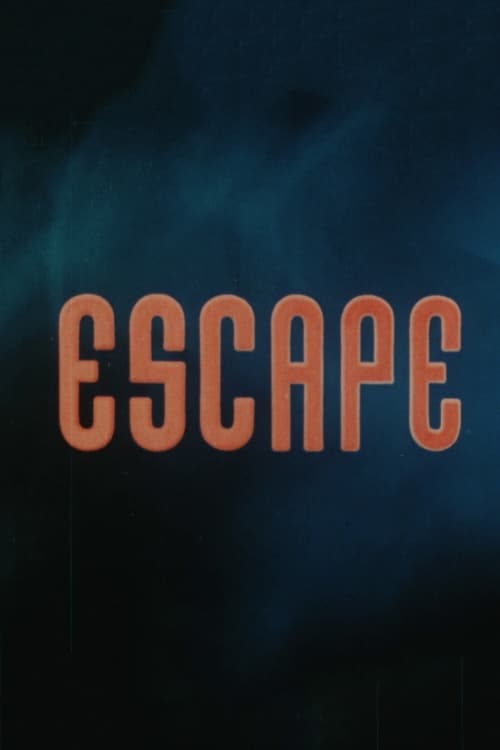
Escape (Synchronomy No. 4)
Synopsis
To the toccata portion of Bach's "Toccata and fugue in D minor," we watch a play of sorts. Blue smoke forms a background; a grid of black lines is the foreground. Behind the lines, a triangle appears, then patterns of multiple triangles. Their movements reflect the music's rhythm. Behind the barrier of the black lines, the triangle moves, jumps, and takes on multiple shapes. In contrast with the blue and the black, the triangles are warm: orange, red, yellow. The black lines bend, swirl into a vortex, then disappear. The triangle pulsates and a set of many of them rises.
Release History & Theatrical Window
September 5, 1937
Wide Cinema Exhibition
Key Information & Fast Facts
- Director
- Mary Ellen Bute, Ted Nemeth
- Original Score
- Johann Sebastian Bach
- Original Title
- Escape (Synchronomy No. 4)
- Country of Origin
- United States of America
- Spoken Languages
- No Language
- Runtime
- 4m
- Production Studios
- Expanding Cinema
Creative Leadership & Key Crew
Mary Ellen Bute, Ted Nemeth
Johann Sebastian Bach
Department Leadership Roster

Johann Sebastian Bach
Original Music Composer

Mary Ellen Bute
Director
Mary Ellen Bute
Production Design

Ted Nemeth
Director
Production Stills & Gallery
Official cinematic photography and background stills for Escape (Synchronomy No. 4).
Featured In Curated Collections
Editorial lists, community rankings, and cinematic collections featuring Escape (Synchronomy No. 4).
list4
Similar Titles to Escape (Synchronomy No. 4)
Movies sharing stylistic DNA, tone, and thematic storytelling
 8.4
 6.0
 5.0
 7.5
 6.7
 6.3
 7.4
 7.0
 7.0
 10.0
 8.0
 6.0
 3.3
 6.4


 3.7
 7.0
 5.6
More Like Escape (Synchronomy No. 4)
Recommended titles matching themes, cast, and genres.



Frequently Asked Questions About Escape (Synchronomy No. 4)
Quick factual answers about cast, synopsis, director, box office, and release information.
What is Escape (Synchronomy No. 4) about?
To the toccata portion of Bach's "Toccata and fugue in D minor," we watch a play of sorts. Blue smoke forms a background; a grid of black lines is the foreground. Behind the lines, a triangle appears, then patterns of multiple triangles. Their movements reflect the music's rhythm. Behind the barrier of the black lines, the triangle moves, jumps, and takes on multiple shapes. In contrast with the blue and the black, the triangles are warm: orange, red, yellow. The black lines bend, swirl into a vortex, then disappear. The triangle pulsates and a set of many of them rises.
Who directed Escape (Synchronomy No. 4)?
Escape (Synchronomy No. 4) was directed by Mary Ellen Bute, Ted Nemeth.
Who stars in Escape (Synchronomy No. 4)?
The principal cast of Escape (Synchronomy No. 4) includes Not specified.
When was Escape (Synchronomy No. 4) released and how long is it?
Escape (Synchronomy No. 4) was released in 1937 with a total runtime of 4m.
Who composed the musical score for Escape (Synchronomy No. 4)?
The original motion picture soundtrack for Escape (Synchronomy No. 4) was composed by Johann Sebastian Bach.