
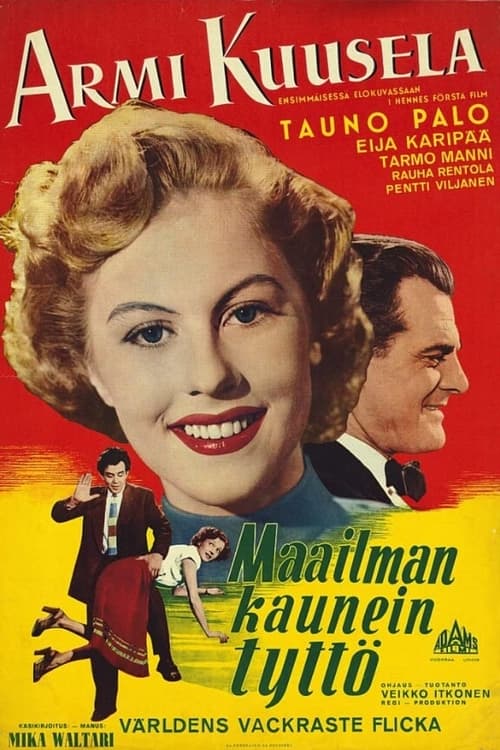
Top Cast
Explore Star Directory →
Armi Kuusela
Armi

Tauno Palo
Jack Coleman

Eija Karipää
Eija Isohonka
Tarmo Manni
Martti Kataja
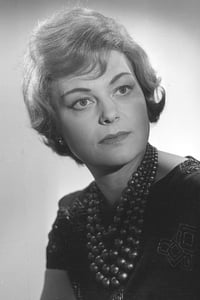
Rauha Rentola
Mimmi
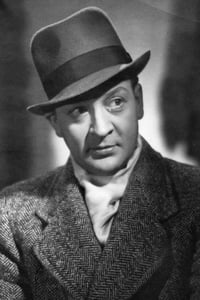
Pentti Viljanen
Cpl. Mätäs

Elli Ylimaa
Manageress of boarding school
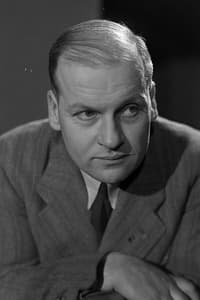
Ossi Elstelä
Antti Isohonka
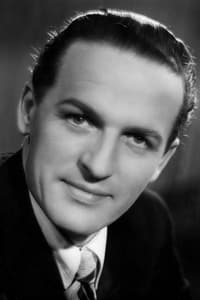
Tauno Majuri
Oksanen - Architect
Aila Koivikko
Armi as a child

Aku Korhonen
Mr. Coleman

Maija Karhi
student
Sirkka Hirvonen
student
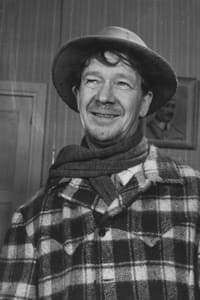
Kaarlo Wilska
soldier
Hannes Veivo
soldier

Unto Salminen
soldier
Arvo Jorma
soldier
Lennart Lauramaa
soldier
Key Information & Fast Facts
- Director
- Veikko Itkonen
- Screenplay & Story
- Mika Waltari
- Original Score
- George de Godzinsky
- Original Title
- Maailman kaunein tyttö
- Country of Origin
- Finland
- Spoken Languages
- Finnish
- Runtime
- 1h 20m
- Production Studios
- Veikko Itkonen
Creative Leadership & Key Crew
Veikko Itkonen
Mika Waltari
George de Godzinsky
Erkki Imberg
Veikko Itkonen
Veikko Itkonen
Department Leadership Roster
Tapio Vilpponen
Production Design
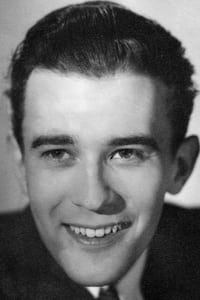
Veikko Itkonen
Director
Veikko Itkonen
Producer
Veikko Itkonen
Editor

Mika Waltari
Writer
Erkki Imberg
Director of Photography
George de Godzinsky
Original Music Composer
More Like Maailman kaunein tyttö
Recommended titles matching themes, cast, and genres.







Frequently Asked Questions About Maailman kaunein tyttö
Quick factual answers about cast, synopsis, director, box office, and release information.
What is Maailman kaunein tyttö about?
Unexpected romance is in the air when a young woman from Finnish boarding school meets an American millionaire.
Who directed Maailman kaunein tyttö?
Maailman kaunein tyttö was directed by Veikko Itkonen.
Who stars in Maailman kaunein tyttö?
The principal cast of Maailman kaunein tyttö includes Armi Kuusela, Tauno Palo, Eija Karipää, Tarmo Manni, Rauha Rentola.
When was Maailman kaunein tyttö released and how long is it?
Maailman kaunein tyttö was released in 1953 with a total runtime of 1h 20m.
Who composed the musical score for Maailman kaunein tyttö?
The original motion picture soundtrack for Maailman kaunein tyttö was composed by George de Godzinsky.