

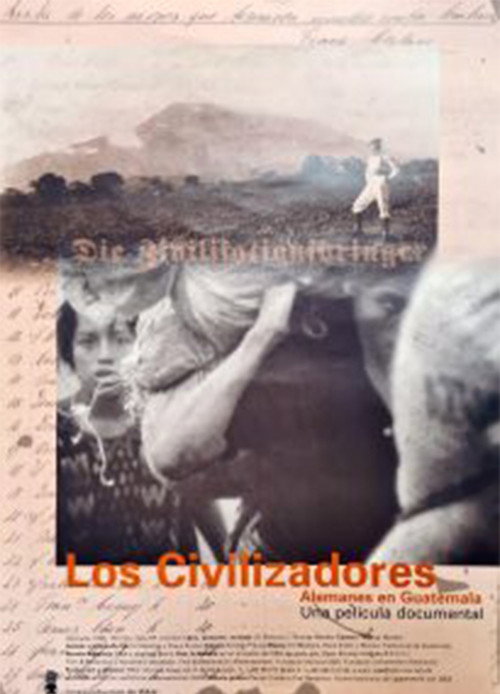
The Civilizers – Germans in Guatemala
Los Civilizadores - Alemanes en Guatemala
Synopsis
For more than a century, Guatemala has been home to a small yet highly influential German community. Its prosperity began with the coffee boom and has continued, almost uninterrupted, to the present day. Convinced of belonging to a superior culture, its members sought to impose their model of civilization on Guatemala. Elder coffee barons present faded photographs, and through their stories, the history of colonization unfolds. But the film shifts its gaze toward the other, toward the Indigenous people who labor on the plantations. The film portrays several generations of families and, without commentary, presents twentieth-century attitudes that time has relativized but not changed. A journey through questions of power, identity, and civilization. Based on years of extensive research, it offers a new analysis of colonialism and its destructive consequences in Guatemala and Latin America.
Trailers, Teasers & Extra Featurettes
Official promotional previews, behind-the-scenes footage, and exclusive clips.
Los Civilizadores - Alemanes en Guatemala - Trailer oficial
Type: Trailer • Published 2017-11-22
Top Cast
Explore Star Directory →Julio Achilá
Self
Esteban Caal
Self
Felipe Caal
Self
Comunidades de Población en Resistencia (CPR)
Selves
Vicente Cruz
Self
Julio Delgado
Self
Jacobo Santiago Contreras
Self
Familia Droege
Selves
Mathilde Dieseldorff-Quirin
Self
Fritz García-Gallon
Self
Lily de Heinemann
Self
Manfred Krarz
Self
Inge Schleehauf
Self
Carlos Quirin
Self
Rev. Marco Tulio Recinos
Self
Herbert Seibert
Self
Arne Sapper
Self
Miguel Bareda
Voice
Key Information & Fast Facts
- Director
- Uli Stelzner, Thomas Walther
- Screenplay & Story
- Uli Stelzner, Thomas Walther
- Original Score
- Till Mertens, Hans Kolter
- Original Title
- Los Civilizadores - Alemanes en Guatemala
- Country of Origin
- Guatemala, Germany
- Spoken Languages
- Spanish, German
- Runtime
- Unknown
- Production Studios
- Iskacine, BR
Creative Leadership & Key Crew
Uli Stelzner, Thomas Walther
Uli Stelzner, Thomas Walther
Till Mertens, Hans Kolter
Kerstin Preuss
Simone Stewens
Department Leadership Roster
Uli Stelzner
Director
Thomas Walther
Director
Kerstin Preuss
Editor
Uli Stelzner
Writer
Thomas Walther
Writer
Production Stills & Gallery
Official cinematic photography and background stills for The Civilizers – Germans in Guatemala.
More Like The Civilizers – Germans in Guatemala
Recommended titles matching themes, cast, and genres.












Frequently Asked Questions About The Civilizers – Germans in Guatemala
Quick factual answers about cast, synopsis, director, box office, and release information.
What is The Civilizers – Germans in Guatemala about?
For more than a century, Guatemala has been home to a small yet highly influential German community. Its prosperity began with the coffee boom and has continued, almost uninterrupted, to the present day. Convinced of belonging to a superior culture, its members sought to impose their model of civilization on Guatemala. Elder coffee barons present faded photographs, and through their stories, the history of colonization unfolds. But the film shifts its gaze toward the other, toward the Indigenous people who labor on the plantations. The film portrays several generations of families and, without commentary, presents twentieth-century attitudes that time has relativized but not changed. A journey through questions of power, identity, and civilization. Based on years of extensive research, it offers a new analysis of colonialism and its destructive consequences in Guatemala and Latin America.
Who directed The Civilizers – Germans in Guatemala?
The Civilizers – Germans in Guatemala was directed by Uli Stelzner, Thomas Walther.
Who stars in The Civilizers – Germans in Guatemala?
The principal cast of The Civilizers – Germans in Guatemala includes Julio Achilá, Esteban Caal, Felipe Caal, Comunidades de Población en Resistencia (CPR), Vicente Cruz.
When was The Civilizers – Germans in Guatemala released and how long is it?
The Civilizers – Germans in Guatemala was released in 1998 with a total runtime of Unknown.
Who composed the musical score for The Civilizers – Germans in Guatemala?
The original motion picture soundtrack for The Civilizers – Germans in Guatemala was composed by Till Mertens, Hans Kolter.