
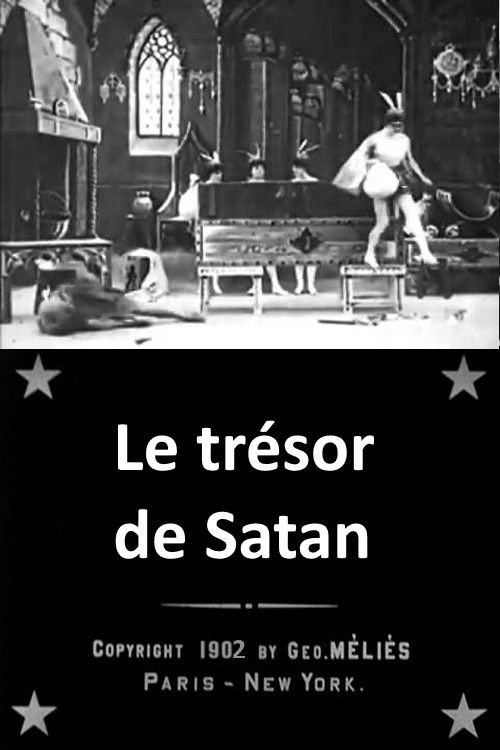
The Treasures of Satan
Les Trésors de Satan
Synopsis
The setting of this fantastic scene represents the hall of an old chateau in which a miser has locked up seven large bags containing his wealth. Satan, who has made his way into the chateau, puts the seven bags in a strong box, and makes with his hands some cabalistic motions. The miser comes into the hall and is greatly astonished to find his fortune missing. He opens the coffer and immediately the bags leap out. He gathers them up and puts them back into the coffer. When he opens it again he finds that they have been transformed into seven young girls, who rush out and chase after him, beating him unmercifully. They shut him up in the coffer from which his gold has vanished. The miser pushes open the lid of the coffer, and to his profound despair finds that both young girls and money have disappeared. (This view is most sensational in its mysterious scenes.) (Star Film Catalog)
Top Cast
Explore Star Directory →Key Information & Fast Facts
- Director
- Georges Méliès
- Original Title
- Les Trésors de Satan
- Country of Origin
- France
- Spoken Languages
- No Language
- Runtime
- 3m
- Production Studios
- Star Film
Creative Leadership & Key Crew
Georges Méliès
Department Leadership Roster

Georges Méliès
Director
Featured In Curated Collections
Editorial lists, community rankings, and cinematic collections featuring The Treasures of Satan.
Medieval
Auto-filled from Letterboxd lists
list2
Georges Méliès
Marie-Georges-Jean Méliès, known as Georges Méliès (/meɪˈljɛs/; French: [meljɛs]; 8 December 1861 – 21 January 1938), was a French illusionist and film director who led many technical and narrative developments in the earliest days of cinema. Méliès was an especially prolific innovator in the use of special effects, popularizing such techniques as substitution splices, multiple exposures, time-lapse photography, dissolves, and hand-painted color. He was also one of the first filmmakers to use storyboards. His films include A Trip to the Moon (1902) and The Impossible Voyage (1904), both involving strange, surreal journeys somewhat in the style of Jules Verne, and are considered among the most important early science fiction films, though their approach is closer to fantasy.
Similar Titles to The Treasures of Satan
Movies sharing stylistic DNA, tone, and thematic storytelling
 5.5
 6.6Anime

 4.9
 6.3
 6.8
 4.0
 6.4
 7.0

 6.5
 6.3
 6.2
More Like The Treasures of Satan
Recommended titles matching themes, cast, and genres.







Frequently Asked Questions About The Treasures of Satan
Quick factual answers about cast, synopsis, director, box office, and release information.
What is The Treasures of Satan about?
The setting of this fantastic scene represents the hall of an old chateau in which a miser has locked up seven large bags containing his wealth. Satan, who has made his way into the chateau, puts the seven bags in a strong box, and makes with his hands some cabalistic motions. The miser comes into the hall and is greatly astonished to find his fortune missing. He opens the coffer and immediately the bags leap out. He gathers them up and puts them back into the coffer. When he opens it again he finds that they have been transformed into seven young girls, who rush out and chase after him, beating him unmercifully. They shut him up in the coffer from which his gold has vanished. The miser pushes open the lid of the coffer, and to his profound despair finds that both young girls and money have disappeared. (This view is most sensational in its mysterious scenes.) (Star Film Catalog)
Who directed The Treasures of Satan?
The Treasures of Satan was directed by Georges Méliès.
Who stars in The Treasures of Satan?
The principal cast of The Treasures of Satan includes Georges Méliès.
When was The Treasures of Satan released and how long is it?
The Treasures of Satan was released in 1902 with a total runtime of 3m.