
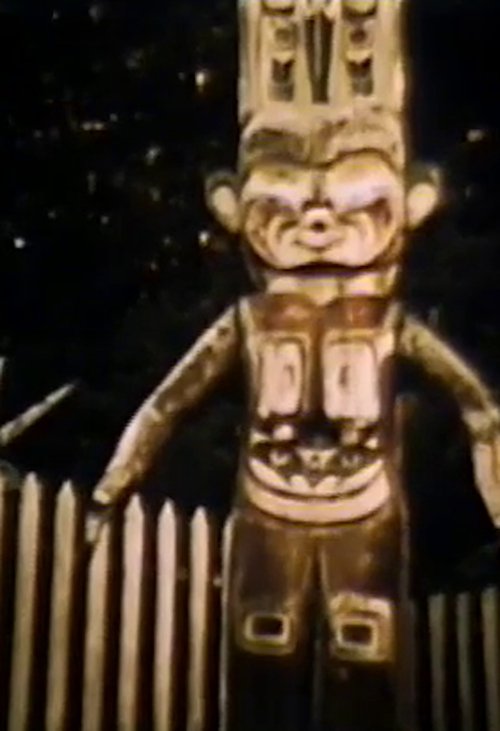
A Conversation with Marcel Duchamp
Synopsis
Filmed amidst the Arensberg collection at the Philadelphia Museum of Art, where 35 works by Marcel Duchamp are gathered, this 1956 NBC interview features the artist talking with James Johnson Sweeney, former director of the Guggenheim Museum. Duchamp describes his transition away from Impressionism toward a Cubist, and then post-Cubist, approach, providing commentary while standing before Nude Descending a Staircase (“I was not aware of Italian Futurism when I painted it”) and The Large Glass (“The two crackings are symmetrically arranged and there is… almost an intention there… a ready-made intention, in other words, that I respect and love.”). These concepts are paradoxically, although quite logically, articulated alongside his desire for “dryness” and mechanical precision. Viewers also gain insight into Duchamp’s thoughts on painting for an “ideal” public—a notion he clearly distinguishes from ivory-tower elitism.
Top Cast
Explore Star Directory →
Release History & Theatrical Window
January 1, 1956
Wide Cinema Exhibition
Key Information & Fast Facts
- Director
- Robert D. Graff
- Original Title
- A Conversation with Marcel Duchamp
- Spoken Languages
- English
- Runtime
- 30m
- Production Studios
- NBC
Creative Leadership & Key Crew
Robert D. Graff
Richard Leacock
Carl Lerner
Department Leadership Roster
Robert D. Graff
Director
Carl Lerner
Editor

Richard Leacock
Director of Photography
Production Stills & Gallery
Official cinematic photography and background stills for A Conversation with Marcel Duchamp.
More Like A Conversation with Marcel Duchamp
Recommended titles matching themes, cast, and genres.


Frequently Asked Questions About A Conversation with Marcel Duchamp
Quick factual answers about cast, synopsis, director, box office, and release information.
What is A Conversation with Marcel Duchamp about?
Filmed amidst the Arensberg collection at the Philadelphia Museum of Art, where 35 works by Marcel Duchamp are gathered, this 1956 NBC interview features the artist talking with James Johnson Sweeney, former director of the Guggenheim Museum. Duchamp describes his transition away from Impressionism toward a Cubist, and then post-Cubist, approach, providing commentary while standing before Nude Descending a Staircase (“I was not aware of Italian Futurism when I painted it”) and The Large Glass (“The two crackings are symmetrically arranged and there is… almost an intention there… a ready-made intention, in other words, that I respect and love.”). These concepts are paradoxically, although quite logically, articulated alongside his desire for “dryness” and mechanical precision. Viewers also gain insight into Duchamp’s thoughts on painting for an “ideal” public—a notion he clearly distinguishes from ivory-tower elitism.
Who directed A Conversation with Marcel Duchamp?
A Conversation with Marcel Duchamp was directed by Robert D. Graff.
Who stars in A Conversation with Marcel Duchamp?
The principal cast of A Conversation with Marcel Duchamp includes Marcel Duchamp.
When was A Conversation with Marcel Duchamp released and how long is it?
A Conversation with Marcel Duchamp was released in 1956 with a total runtime of 30m.